
Every Horse Here Is on a Plan. Some of Them Are Not for Sale.
We buy horses to produce them, not to move them on. Each one has a plan for its life with us, and the plan decides when it is ready to leave. Some of them are staying.
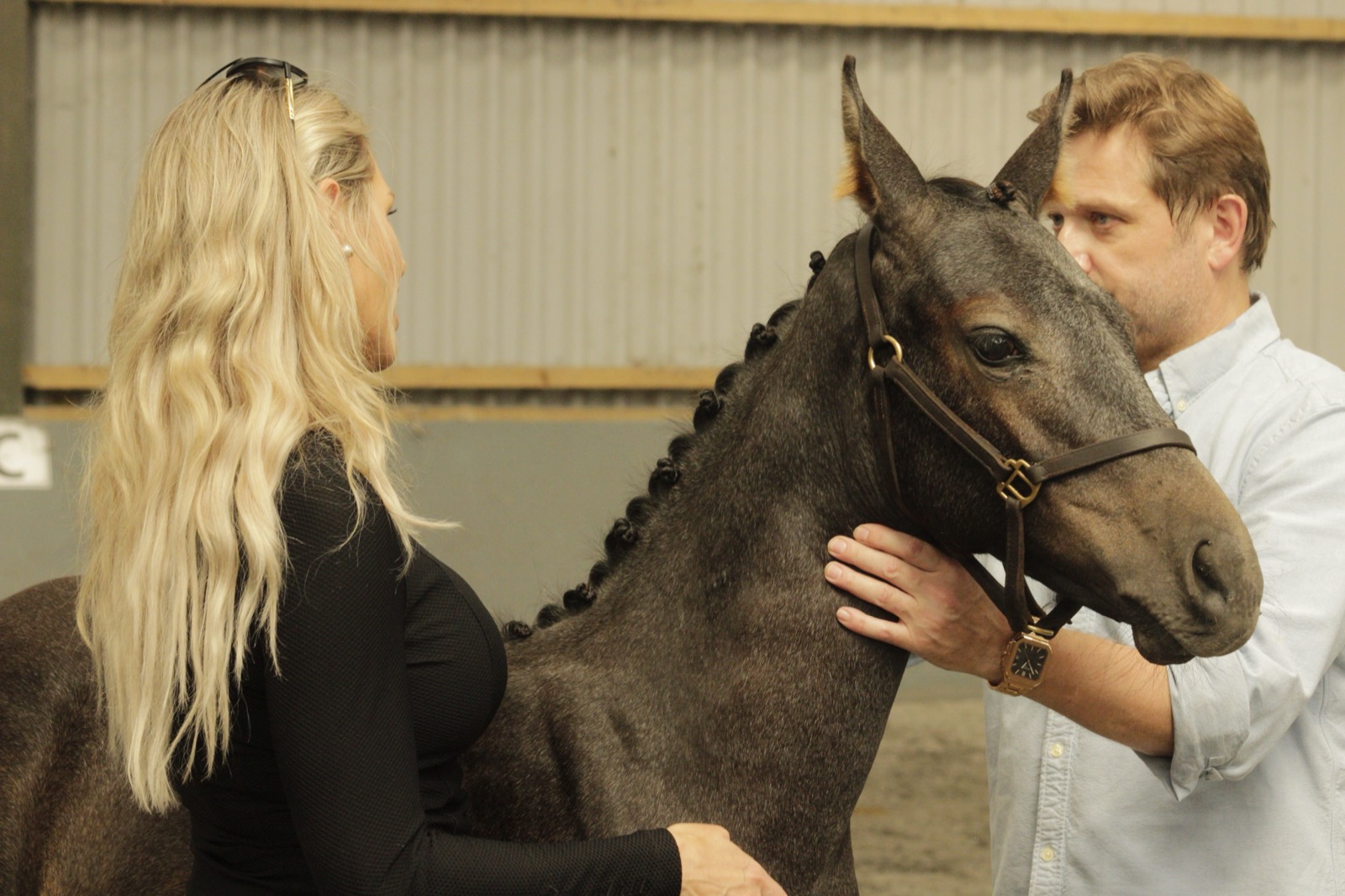
Harriet discusses her plan for Valentina. No two horses are the same, so no two plans can be the same either. Whilst the plans remain fluid, each is adapted to where the horse will likely be happiest and able to thrive. Different horses go to different riders who suit the horse with their style. The pairing has to be complementary.
The question nobody asks out loud
Every buyer looking at a sport horse is asking themselves the same thing, whether or not they say it: why is this horse available?
It is a fair question. In a market where most horses pass through several hands between the breeder and the rider, the honest answer is often that somebody bought it to sell it, and the moment to sell it has arrived. Nothing about that is dishonest. It is simply how a dealing business has to work. A horse that sits still costs money.
We answer that question differently, and this article explains why, because it is the single thing that most changes what you are buying.
Sybil went to Longines Global Champions Tour before he went to a teenager
In 2024 a horse of ours called Sybil, registered as HHF I-Dillinger, competed at Longines Global Champions Tour London under the Horses Smith banner. He placed seventh, twice, at that show.
He was then sold, as a rising eight year old, to Sue Knight for her teenage daughter Lauren.
Read those two paragraphs again in that order, because the order is the point. A horse being produced for turnover does not go to LGCT London first. That is an expensive, high pressure outing with no resale logic behind it at all. He went because that was where his production had got to, and because we wanted to know what he could do.
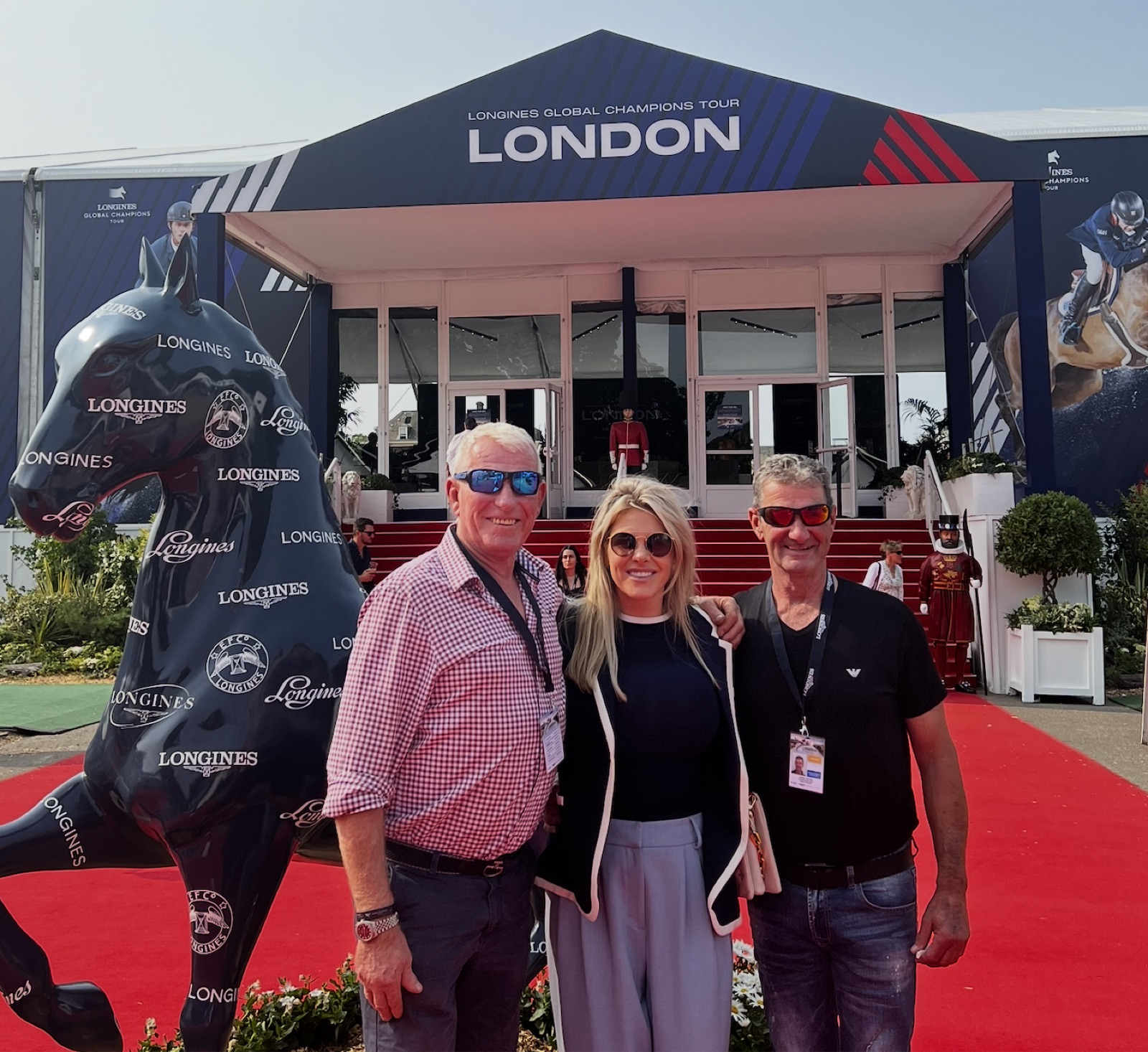
Harriet took Sybil to Longines Global Champions Tour in London with the late Chris Moyce and his partner Mark Bellinger, both of whom Harriet credits with almost everything she knows about horses.
What happened next is the part that matters more. Lauren has since qualified for the Members Cup Nationals with him. He did not peak at the point of sale and tail off. He carried on climbing, with a young amateur rider, in a family home.
Sue's own words are on our testimonials page, and the line in them we are proudest of is not about the horse at all. It is: "She genuinely cares about her horses and is committed to matching them with the right homes."
That is the whole business, described by somebody who bought from it.
What a plan actually means
Every horse we own has one. It is not a document and it is not marketing. It is a set of decisions about that specific animal:
- when it is backed, and by whom
- what it is shown at, and at what age
- what is left alone because the horse is not ready
- what is investigated the moment something looks off
- and what the horse is being produced towards
The plan is made for the horse, not for a sale window. Sometimes it means an outing that costs us money and returns nothing except information. Sometimes it means doing nothing at all for a season, which is the hardest thing to sell to yourself when you have money tied up in an animal.
It also means we know things about our horses that nobody buying and reselling has time to learn. When our founder writes an assessment of a horse, as she does on every page in the collection, she is writing about an animal she has handled since it was born or since the day it arrived. That is why those assessments say awkward things. On one of our foals we volunteer a mild upright hoof and our vet''s view that she will grow out of it. On another we say plainly that she is the best of the foals we have for sale rather than the best we have ever bred, because that is what our founder actually said and we were not going to improve on it.
You cannot write that way about a horse you met six weeks ago.
Some horses are not for sale, and that is the point
Look through the site and you will find horses with full pages, full pedigrees and no price. Several of them.
They are not oversights. They are the other half of the argument.
If every horse we owned were for sale, "we produce rather than trade" would be a slogan. The horses we have chosen to keep are the evidence that the plan is real. Some are young mares we intend to breed from. Some are simply better than the price anybody has offered. If somebody makes a serious enough approach we will always listen, and occasionally one of them will move. But they are not on the market, and we are comfortable with them staying exactly where they are.
That comfort is the thing we would ask you to weigh. A seller who is relaxed about a horse not selling is a seller who does not need to persuade you of anything.
The same logic runs through our broodmares. They are the foundation of the programme, they each have their own page now, and what they have produced is listed there with links to every foal. Those pages exist because the mares are the reason any of the young horses are worth looking at, and because a buyer who thinks in damlines deserves somewhere better than a screenshot to read.
Why buying from the owner is different from buying through a dealer
This is not a criticism of dealers. Good ones do a real job, and a buyer who does not have the time or the network to look for themselves is often better off with one.
But the structure is different, and the difference is not about honesty. It is about economics.
A dealer''s business requires movement. Capital tied up in a horse that is not selling is capital not working, so the pressure, however professional the dealer, runs towards the sale happening. That pressure is not wickedness. It is arithmetic.
We breed and produce what we sell. Every horse we offer is one we have owned, fed, handled and made decisions about. Our capital is already committed for years, so a horse that does not sell this season is not a problem to be solved. It is a horse that carries on with its plan.
Three practical consequences, and these are the ones worth caring about:
We tell you what is wrong. Veterinary findings go on the page, including minor ones, with the vet''s opinion attached. We would rather you heard it from us than from your own vet on the day.
Nobody is between you and the person who knows the horse. You are talking to the person who decided when it was backed and what it was shown at.
We will tell you when a horse is not right for you. A horse that goes to the wrong home comes back to us in reputation, and we would rather lose the sale. Sybil went to an amateur teenager because he was the right horse for an amateur teenager, not because that was the best price available for him.
What this means when you enquire
You will get a straight answer about what has and has not been done. Where a horse has been vetted, we will say so and share the report with a serious buyer. Where nothing has been done, we will say that too, and we are open to you arranging whatever you need.
You will also get asked what you are looking for, and roughly when. Not to qualify you out. It is because the right match matters more to us than the transaction, and because knowing whether you are buying to compete, to produce, or to breed from changes which of our horses we would actually point you at.
Sometimes it will be none of them. That is a legitimate answer and you will get it.
The horse leaves when the plan says so
That is the whole of it. We buy horses to produce them. Each one has a plan for its life with us. When the plan and the right home arrive at the same moment, the horse goes, and we are pleased for it. When they do not, the horse stays, and we are pleased about that too.
Sybil is the clearest version of the argument we can give you, because he is the one you can check. He was produced to the level his ability justified, sold to the home that suited his temperament, and he has kept getting better since he left.
If that is how you would want your horse chosen, look at what is available, read the mares behind them, or tell us what you are looking for.
We will tell you honestly whether we have it.